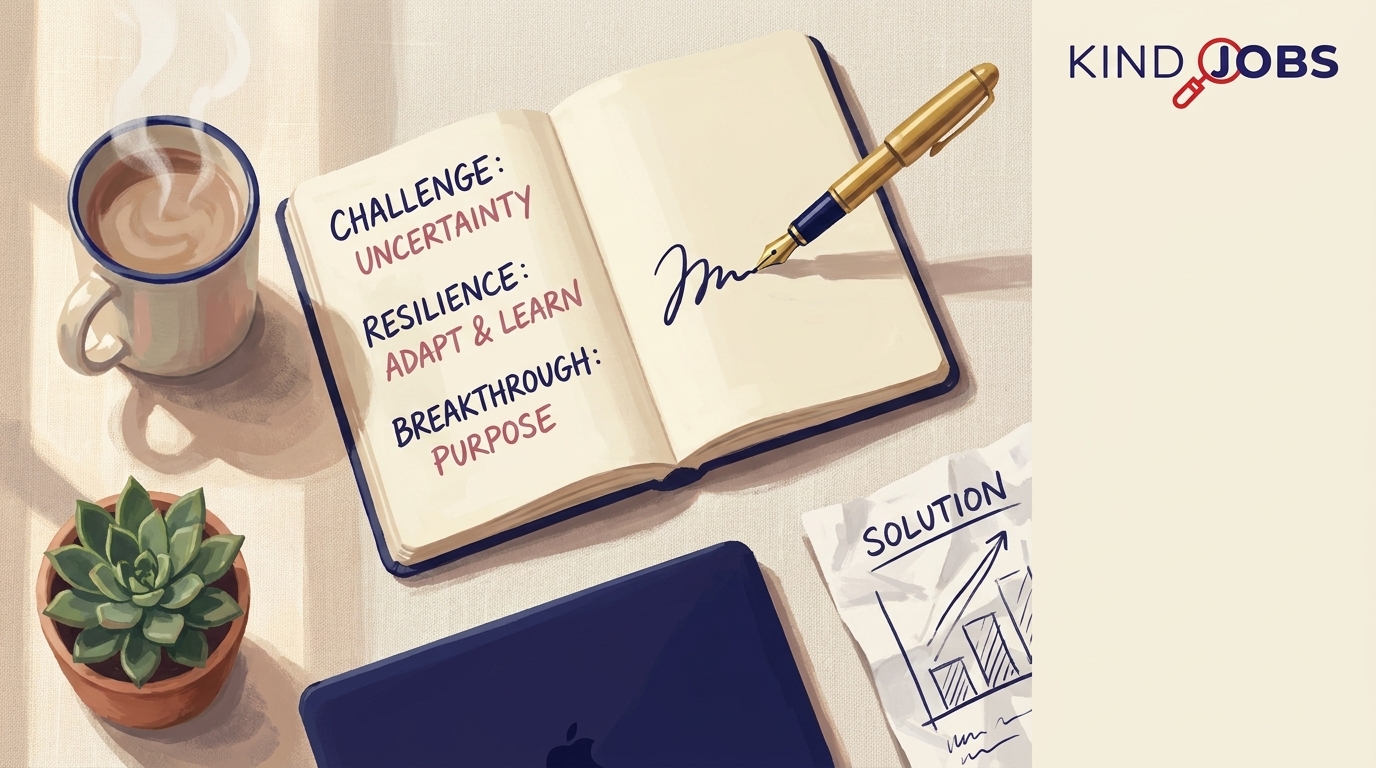
You are sitting across from a hiring manager, things are going smoothly — and then it arrives: “Tell me about a challenge you faced and how you overcame it.” For many Indian job seekers, this describe a challenge interview question is the trickiest moment of the entire process. It feels personal, unpredictable, and easy to fumble.
The good news is that this question follows a clear pattern. Once you understand what interviewers truly want, you can answer it confidently every single time. This guide breaks it all down — from the psychology behind the question to ready-to-use sample answers.
Why Interviewers Ask This Question (and What They’re Really Testing)
Interviewers do not ask this question to embarrass you. Instead, they want to see how you think, adapt, and perform under pressure.
Specifically, they are evaluating three things. First, your problem-solving ability — can you identify a real obstacle and work through it logically? Second, your self-awareness — do you understand your own role in a situation? Third, your resilience — do you bounce back and grow stronger from setbacks?
In fact, a 2026 LinkedIn Talent Trends report found that 92% of hiring managers rate soft skills like adaptability and problem-solving as equally or more important than technical qualifications. This makes the describe a challenge interview question one of the most revealing in any hiring process.
Furthermore, Indian workplaces have become increasingly fast-paced and cross-functional. Employers now want proof — not just promises — that you can handle real-world complexity. Your answer to this question is that proof.
The STAR Framework: Structuring Your Answer for Maximum Impact
The STAR method is a structured technique that keeps your answer focused and compelling. STAR stands for Situation, Task, Action, and Result.
- Situation: Set the scene briefly. Where were you? What was happening?
- Task: Explain your specific responsibility in that moment.
- Action: Describe exactly what you did — not your team, not your manager.
- Result: Share the measurable outcome. Numbers always win here.
For example, instead of saying “I handled a difficult project,” say: “In my final semester in 2026, our team missed a key deadline. I reorganised our task list, held daily check-ins, and we delivered the project two days ahead of the revised schedule.”
However, keep your answer between 90 and 120 seconds when spoken aloud. Longer answers lose the interviewer’s attention quickly. Practice your STAR response until it feels natural, not rehearsed.
Quick STAR Checklist Before Your Interview
- Does your situation relate to the job you are applying for?
- Is your action specific to you personally?
- Does your result include a number, percentage, or clear outcome?
How to Describe a Challenge Interview Sections Catch Candidates Off Guard
Many candidates prepare hard for technical rounds but underestimate behavioural questions. As a result, they walk into the describe a challenge interview section without a plan.
Here are the most common mistakes. First, being too vague — saying “I faced a communication issue” without explaining what it was or what you did. Second, blaming others — this signals poor accountability to any hiring manager. Third, choosing a challenge that is irrelevant to the job role.
By contrast, strong candidates pick a challenge that is relevant, resolved, and reflects growth. They also avoid overly dramatic stories. A well-structured, modest example always beats an exaggerated one.
Additionally, many Indian freshers worry they lack “real” experience. That is not true. Academic projects, college fests, internships, and even family responsibilities can all be powerful examples when structured correctly.
Sample Answers Across Freshers, Mid-Level, and Career Changers
Fresher Example
“During my final year project in 2026, our team lost a core member two weeks before submission. I redistributed the workload, created a shared tracker, and personally handled the testing phase. We submitted on time and scored 88%.”
Mid-Level Professional Example
“In early 2026, our client escalated a complaint about delayed deliverables. I mapped the entire process, identified a bottleneck in approvals, and introduced a weekly sync. Response time dropped by 40% within six weeks.”
Career Changer Example
“Transitioning from teaching to HR in 2026 meant learning entirely new tools. I completed a certified HR course online, shadowed a colleague for three weeks, and independently handled onboarding for a batch of twelve employees within two months.”
Getting Started: Prepare and Find the Right Opportunity
Preparation is everything. Write out two or three STAR-format challenge stories before every interview. Practise them aloud, ideally with a friend or in front of a mirror. Revisiting your stories regularly also helps you stay ready whenever a describe a challenge interview moment arises unexpectedly.
Once your answers feel sharp, you need the right opportunities to use them. Kind Jobs connects Indian job seekers with vetted, transparent employers across industries — completely free for every candidate. Browse roles that match your experience and start applying with confidence today.
For deeper research on Indian hiring trends, the National Career Service Portal offers valuable resources on skills employers prioritise in 2026.
Conclusion
The describe a challenge interview question is not a trap — it is your opportunity to shine. Use the STAR method, choose a relevant story, and focus on what you specifically did to resolve the situation.
Ready to put your skills to the test? Explore thousands of verified job listings on Kind Jobs at kindjobs.in and take your next career step today.